



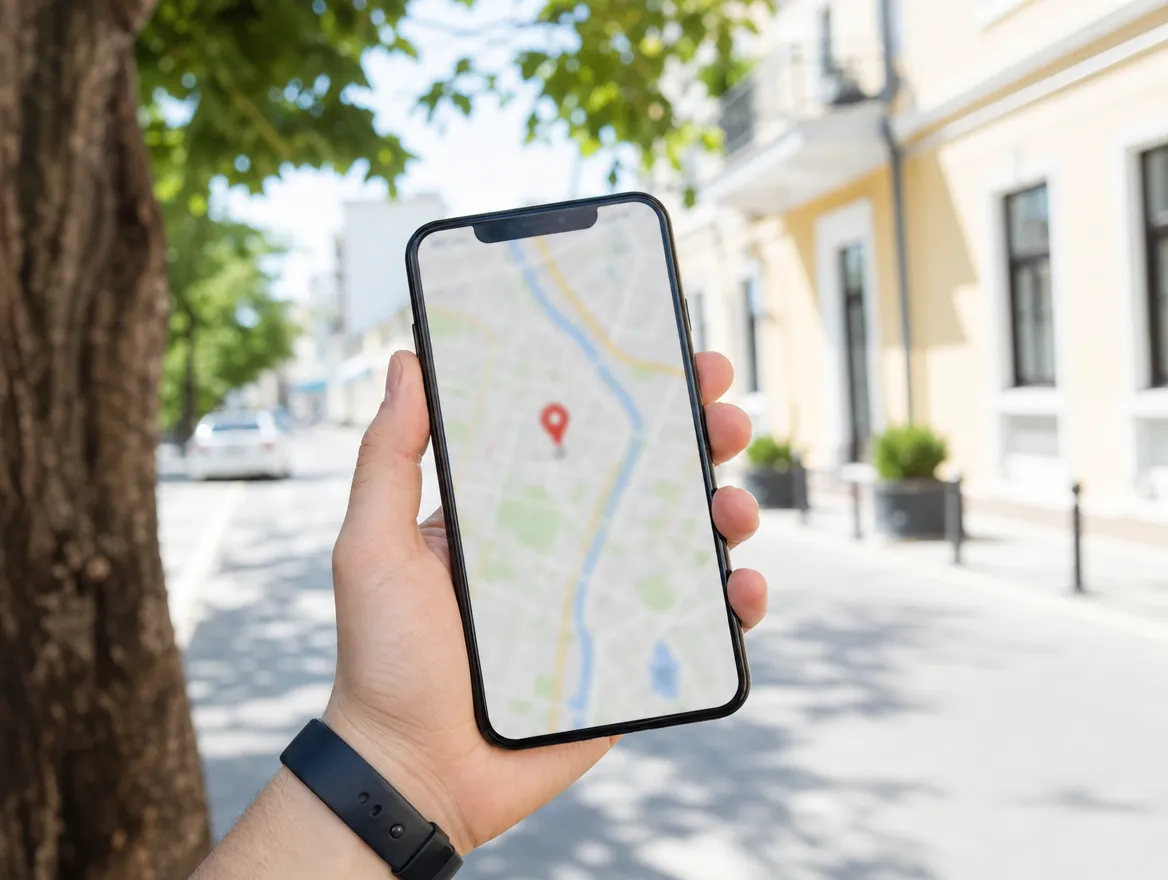
Someone in Alphington needs an electrician. They pick up a phone, type "electrician near me" and look at what comes back. They tap one of the first few results, glance at the reviews, then either call or go back and tap the next one. The whole thing takes under a minute.
That minute is the entire local search market for most trades and small services around Exeter. It is worth understanding what decides who appears in it.
The map results come before the website results
For anything with the words "near me" attached, or anything Google can tell is local, the first thing on the screen is usually a map with three businesses under it. Those three are pulled from Google Business Profile listings, not from websites. If you have not claimed and filled in your profile, you are not in that box, and no amount of work on your website will put you there.
Filling it in properly means the real business name, the categories that match what you actually do, your service area, your opening hours, a phone number that rings, and photographs of your own work rather than stock images. Ten minutes of honest detail beats a clever description.
Your website is what makes the profile believable
People rarely book straight from the map. They tap through, land on your site and spend a few seconds deciding whether you look like a real business who will turn up. That is the job of the site: confirm you exist, confirm you work where they live, and make contact easy.
A customer is not reading your website. They are checking it.
Which means the important things have to be visible without scrolling: what you do, the towns you cover, and a way to get hold of you. A phone number they can tap. A WhatsApp button. A form that takes ten seconds, not a page of questions.
Name your towns, honestly
Google is fairly good at working out where you are, but it will not guess where you are willing to travel. If you cover Exeter, Cullompton, Honiton and Exmouth, those words should appear on the site in normal sentences, in the places a person would expect to read them.
What does not work is a list of forty Devon place names in the footer, or a separate page for every village with the same paragraph copied and pasted. That pattern was common ten years ago and it now reads as spam to both Google and customers. Write about the areas you genuinely serve, and say something specific about working there.
Separate pages for separate services
One long page saying "groundworks, drainage, driveways and fencing" competes with itself. Four short pages, each about one thing, give Google something clear to match a search against and gives the customer a page that answers their exact question.
Each service page needs a plain title, a few paragraphs describing what the job involves and what it typically costs, two or three photographs of that work, and the same easy contact route as everywhere else.
Reviews and photographs do more than keywords
Between two businesses that look equally competent, the one with recent reviews wins. Asking is the hard part. The easiest version is a short message after the job with a direct link to leave a review, sent while the customer is still pleased with the work.
Photographs matter for the same reason. Your own pictures of finished jobs in recognisable local settings say more about your work than any paragraph you could write about quality.
Speed is part of being found
A page that takes four or five seconds on a phone loses people before it appears, and Google uses page experience as part of how it ranks. This is where a lot of small business sites quietly fail: a heavy theme, a slider on the homepage, twenty plugins and a set of full size photographs straight off a camera.
If you only do three things
- Claim and complete your Google Business Profile, with your own photographs and correct categories.
- Make sure your website says what you do and where, above the fold, with a tappable phone number and WhatsApp.
- Ask every satisfied customer for a review, with a link, on the day the job finishes.
That is most of local search for a small business. The rest is doing good work and being easy to contact, which was true long before Google existed. It is also where every site I build starts, whether that is web design in Exeter or a one page site for a trade in a village outside it.
Want this looked at for your business?
Send me your trade and your town. I will tell you straight what would help first.




 Patios
 Drainage

 Brunch

 Nails